You stand in your kitchen, staring at a pile of carrots, onions, and potatoes. The clock ticks as you dread the long minutes it takes to chop them all. Vegetable prep often eats up half your cooking time, leaving you rushed for the fun part. But what if you could cut that time in half? These vegetable cutting hacks will show you how to slice, dice, and chop with speed and ease. You'll end up with uniform pieces that cook evenly, boost your dish's flavor, and make every meal feel effortless.
Section 1: The Foundation – Essential Knife Skills and Safety
Good knife skills form the base of all quick veggie prep. Without them, you waste time and risk cuts. Start here to build confidence in your kitchen.
Choosing and Maintaining Your Most Important Tool
A sharp knife makes chopping veggies fast and safe. Dull blades slip and force you to push harder, which leads to accidents. Pick a chef's knife for most tasks—it's versatile for slicing carrots or dicing onions. A paring knife works best for small jobs like peeling garlic. Use a serrated knife for tough skins on tomatoes.
Keep your knives sharp to stay efficient. Hone them weekly with a sharpening stone or rod. Test sharpness with the paper test: slice a sheet of paper. If it cuts clean without tearing, your blade is ready. This simple check ensures you chop veggies without frustration.
Invest in quality tools that last. Cheap knives bend under pressure and slow you down. With the right ones, you'll notice how much quicker your prep becomes.
Mastering the Claw Grip (The Safety Standard)
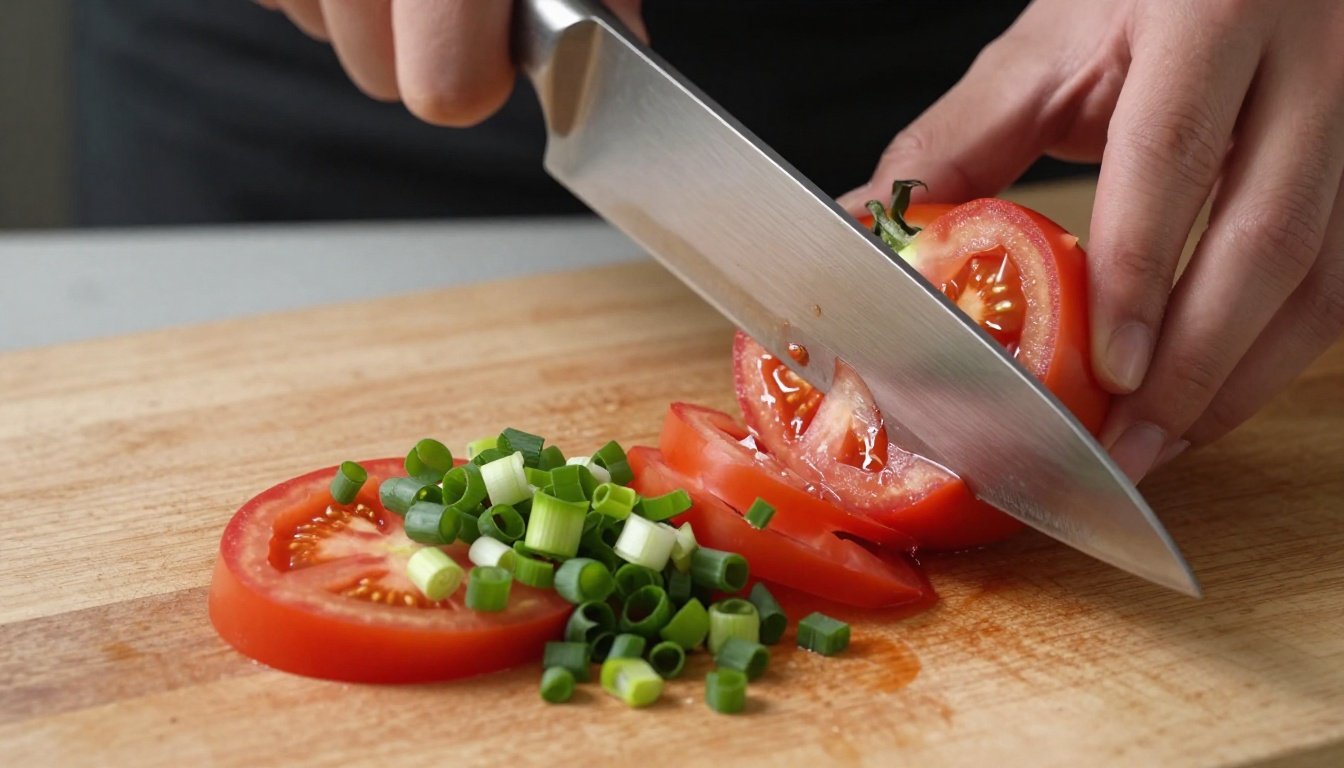
The claw grip keeps your fingers safe while you guide the knife. Tuck your fingertips under, like a claw, and let your knuckles touch the blade's side. This way, the sharp edge stays away from your skin.
Pros in culinary schools teach this grip from day one. It lets you control the cut without slipping. Practice it on soft veggies like zucchini to get the feel.
Once you master it, speed follows naturally. Your hand moves steady, and chops come out even. No more nicks or uneven slices that cook at different rates.
The Rocking Motion vs. The Draw Cut
Use the rocking motion for soft items like herbs or mushrooms. Hold the knife tip on the board and rock the blade forward with your fingers on top. It minces quickly without bruising the food.
For firm veggies like carrots, try the draw cut. Pull the knife toward you in a smooth stroke. This slices clean and saves effort on hard surfaces.
Match the method to the veggie for best results. Rocking works great on basil leaves. Drawing excels with celery sticks. Over time, you'll switch techniques without thinking, cutting prep time by minutes.
Section 2: Speed Cutting Techniques for Uniformity
Uniform cuts mean even cooking and better looks on the plate. These techniques help you achieve that precision fast. Once learned, they turn chaotic chopping into a smooth routine.
The Tourné Technique: Mastering the Seven-Sided Oval
The tourné cut shapes root veggies into small footballs with seven sides. It's perfect for potatoes or carrots in stews. Grip the veggie firm and roll it as you trim off thin slices with your paring knife.
At first, it takes practice to get the oval just right. But the even shape cooks uniform, soaking up flavors well. Pros use it for fancy dishes, yet home cooks gain the same benefits.
To save time, focus on steady pressure. Remove only enough flesh to form the sides. This reduces waste and speeds up the process after a few tries.
The Brunoise and Julienne: Precision for Speed
Brunoise means tiny dice, like for mirepoix in soups. Start by squaring off the veggie, then slice into thin planks. Stack them and cut across for uniform cubes.
Julienne creates matchsticks, ideal for stir-fries. Cut planks lengthwise into thin strips. Keep your stacks even to make slicing quick.
Both cuts build speed through repetition. Practice on onions or bell peppers. Soon, you'll prep a full batch in under five minutes. Uniform pieces release flavors consistently, elevating your meals.
Quartering Onions Without Crying (The Root Trick)
Onions sting your eyes with every chop. Leave the root end whole to keep layers from falling apart. Peel the skin first, then halve the onion from top to base.
Slice vertically toward the root but stop short. Turn it sideways and cut horizontal lines. Finally, dice across, saving the root for last.
This trick cuts tears by limiting gas release. It also holds the onion steady for faster work. Try it next time you make salsa—your eyes will thank you.
Section 3: Hacks for Specific Challenging Vegetables
Some veggies fight back with odd shapes or tough skins. These targeted hacks make them easy to handle. You'll wonder why you ever struggled.
Potatoes and Hard Root Vegetables (The Stability Hack)
Round potatoes roll and cause slips. Cut off one side to make a flat base. Now it sits steady on your board.
For butternut squash, trim the ends first. Then slice the bulb in half lengthwise. This stable start lets you peel and cube without hassle.
Safety rises with this method. No more chasing veggies across the counter. It also speeds up the rest of your cuts, saving precious minutes.
Use your chef's knife with firm pressure. Score any remaining curves if needed. Stable veggies mean smoother, quicker prep every time.
Peeling Tomatoes and Peppers Effortlessly
Tomatoes need smooth skins for sauces. Blanch them in boiling water for 30 seconds. Plunge into ice water right after.
The skin slips off easy now. Score an X on the bottom before blanching for even better results. This works for peaches too.
Peppers get charred over a flame or under the broiler. Steam them in a covered bowl for ten minutes. Rub off the blackened skin—it peels clean.
These methods improve texture in dishes. No gritty bits in your marinara. Prep a batch ahead and freeze for quick meals later.
Separating Cauliflower and Broccoli Florets Quickly
Thick stalks slow you down on cauliflower. Score deep lines around the head's base with your knife. Twist and the florets pop off by hand.
Do the same for broccoli. Cut the stem into pieces after. This beats sawing through tough parts.
You get even florets for roasting or steaming. Less mess on your board. Try it for a stir-fry—prep drops from ten to three minutes.
Save the stems for soup stock. No waste means more value from your veggies.
Section 4: Tools and Time-Saving Shortcuts Beyond the Knife
Knives do most work, but smart tools boost speed. Use these with care to avoid accidents. They turn prep into a breeze.
Using Mandolines Safely and Effectively
A mandoline slices thin and uniform fast. Great for cabbage slaw or potato chips. Always use the hand guard to protect fingers.
Adjust the blade for your needs—thick for gratins, thin for salads. Hold the veggie steady and slide it down.
It saves time on big batches. One pass equals dozens of knife strokes. Clean it right after to keep it sharp.
The "Two-Blade Chop" for Herbs
Herbs pile up in recipes. Grab two chef's knives and hold them parallel. Rock them over the leaves in a seesaw motion.
Or use a mezzaluna, a curved double blade. Chop parsley or cilantro in seconds. No more tedious picking.
This doubles your speed for pesto or garnishes. Fresh herbs stay vibrant. Practice on a bunch— you'll mince a cup fast.
Streamlining Garlic and Ginger Prep
Garlic cloves hide under tight skins. Smash them with the knife's flat side. The peel pops off easy.
Then mince with quick rocks. Ginger works the same—smash, peel, grate. No fiddly tools needed.
This hack cuts prep in half. Use minced garlic straight in stir-fries. Ginger adds zing to curries without the fight.
Conclusion: Consistency, Speed, and Flavor Maximization
Mastering vegetable cutting hacks transforms your kitchen routine. Practice these skills for just 15 minutes a day, and they'll stick. You'll chop faster, safer, and with better results.
Uniform cuts cook even, so flavors blend just right. No more underdone carrots or overcooked onions. Every dish tastes better and takes less time.
Safety comes first—always use the claw grip. Aim for consistency next, then let speed follow. Grab your knife today and try one hack. Your next meal will prove the difference. What's your favorite veggie to chop now? Share in the comments and keep cooking smart.